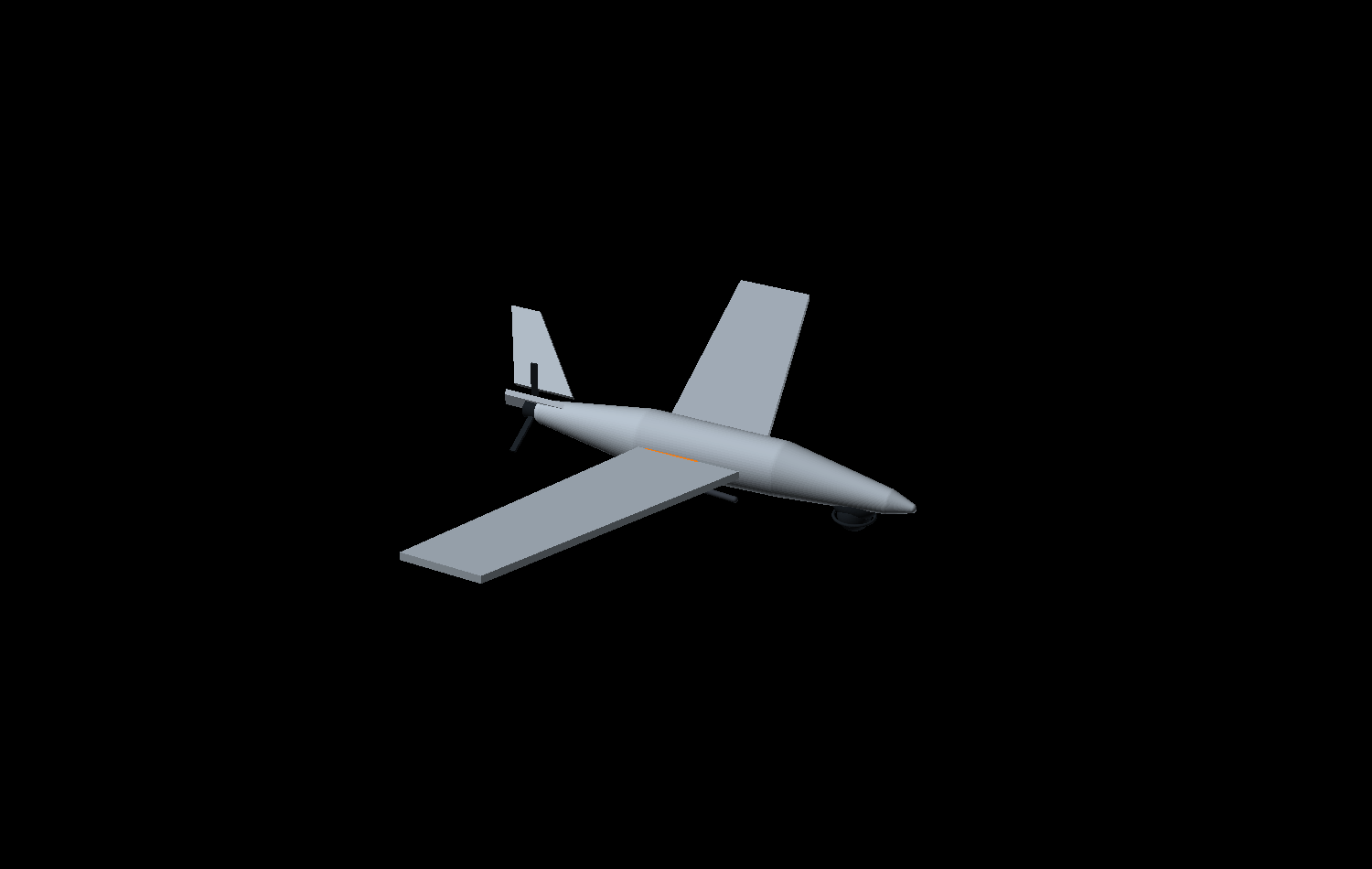
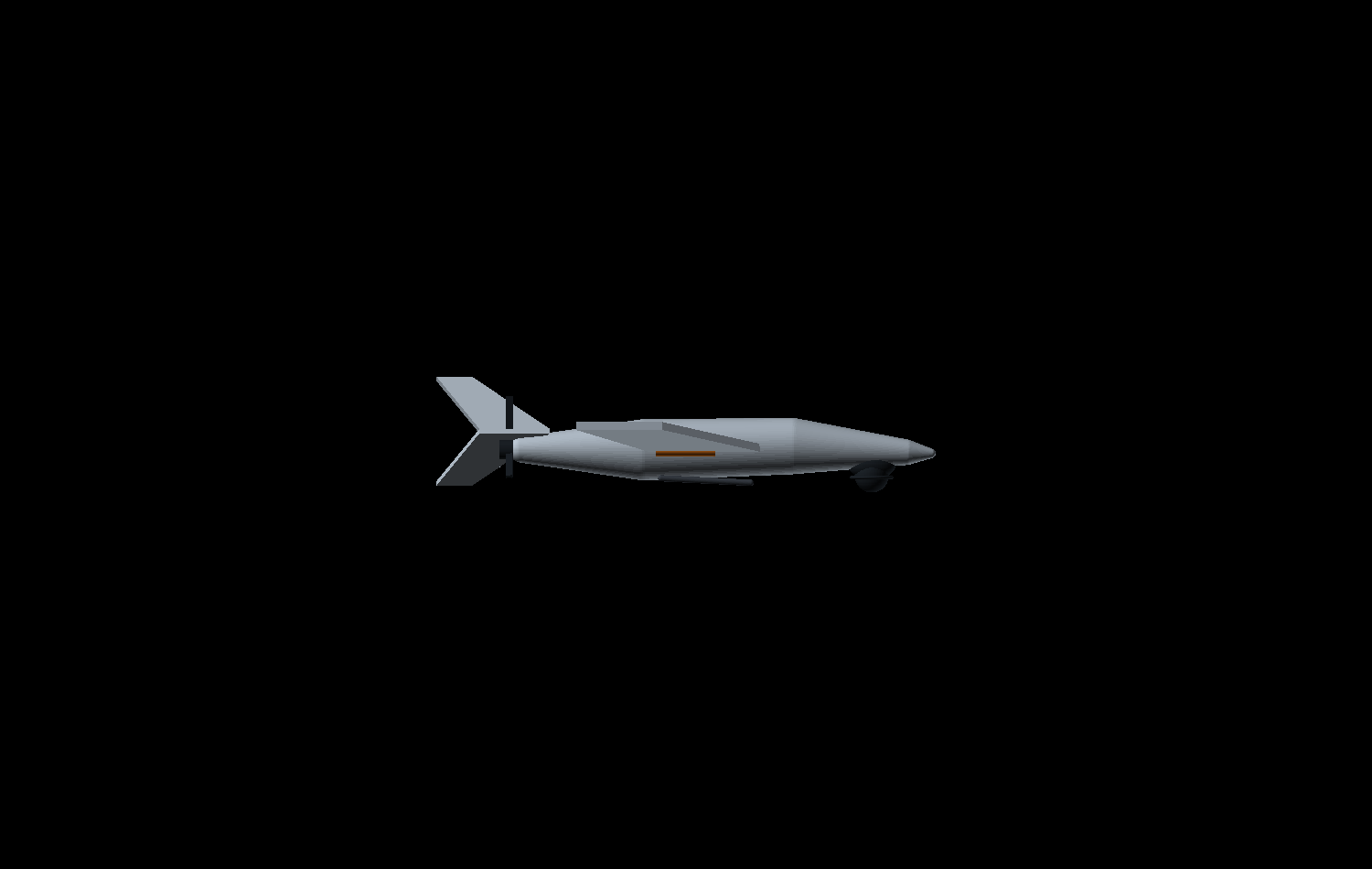
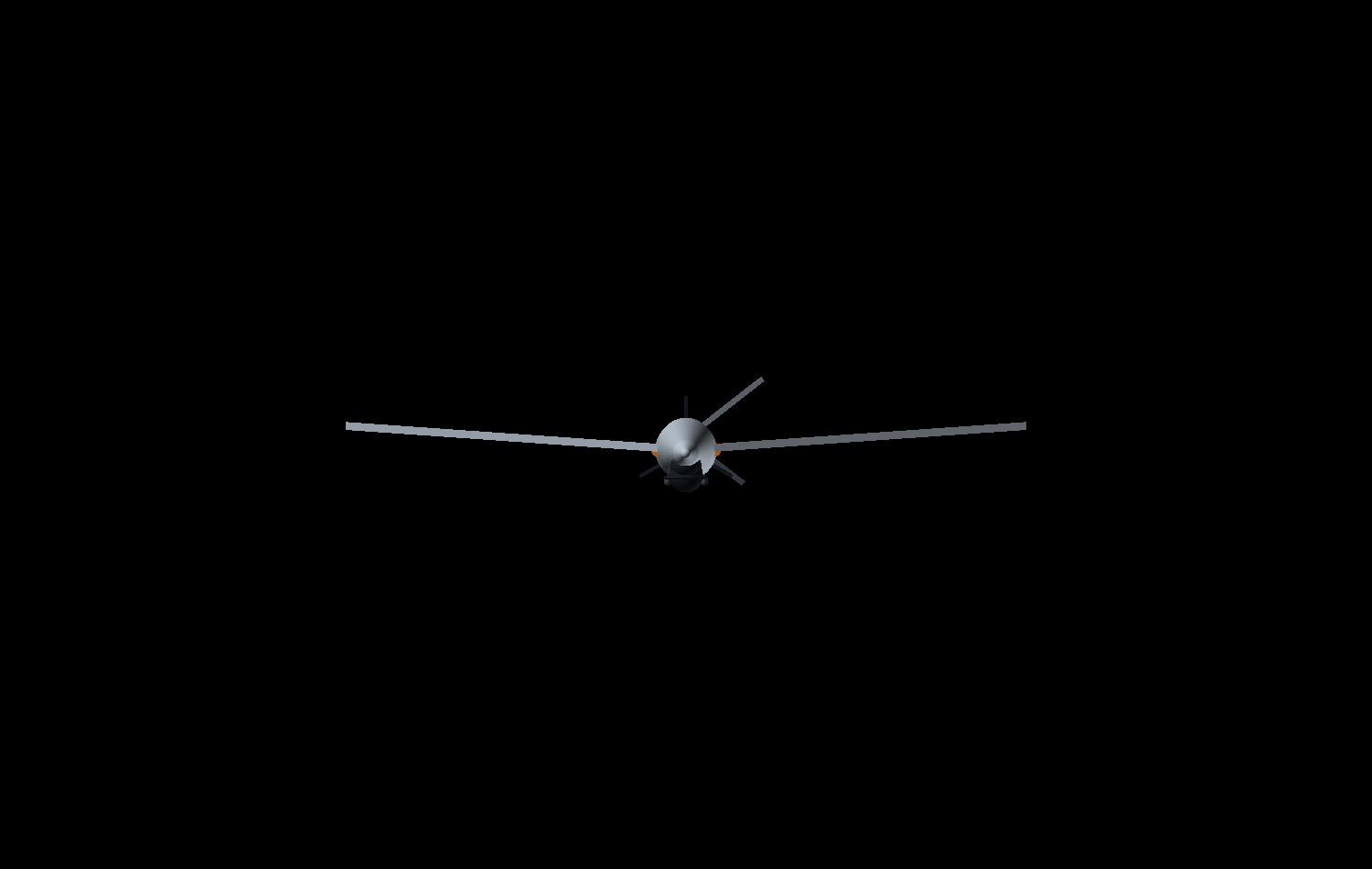
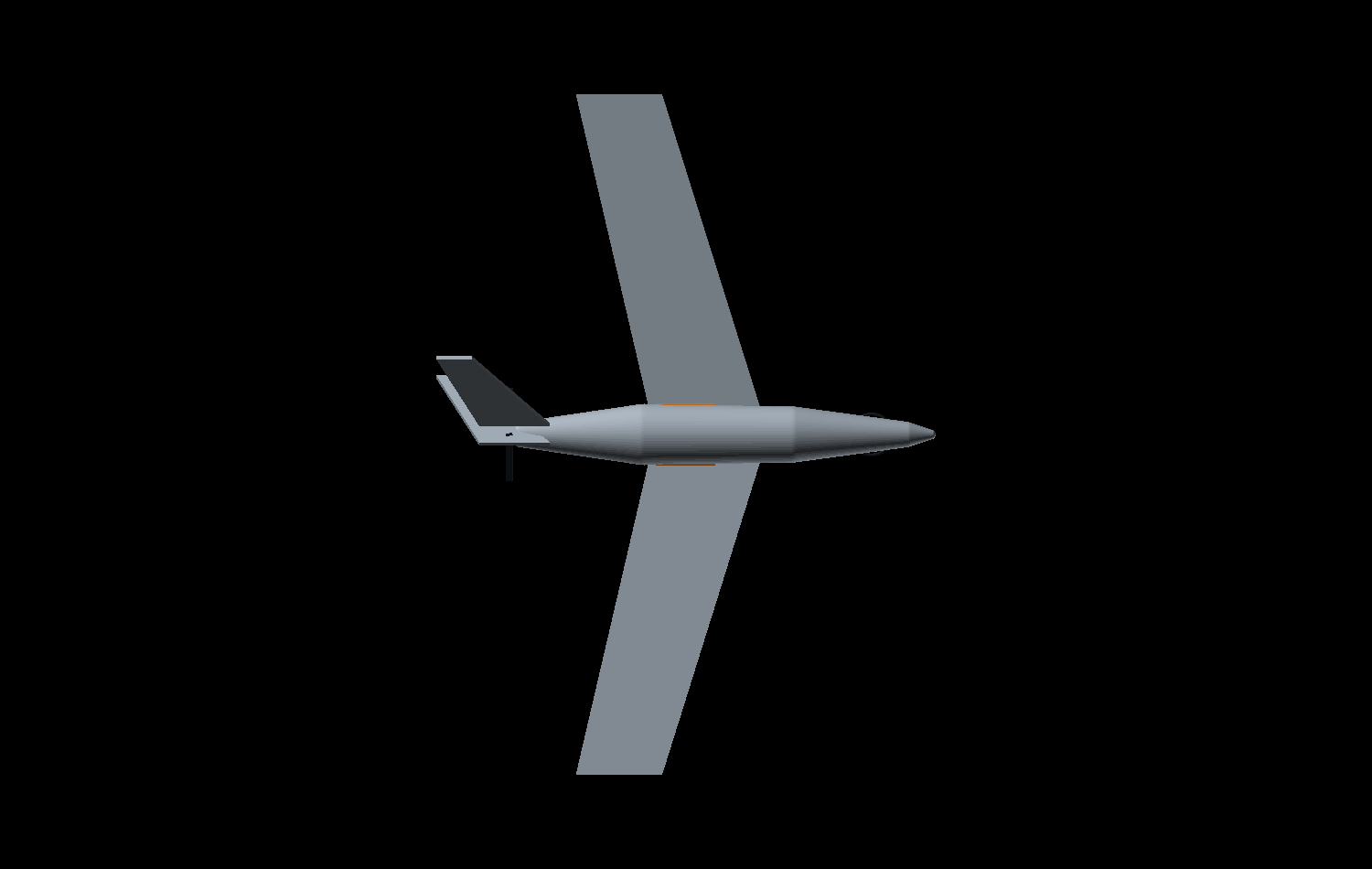
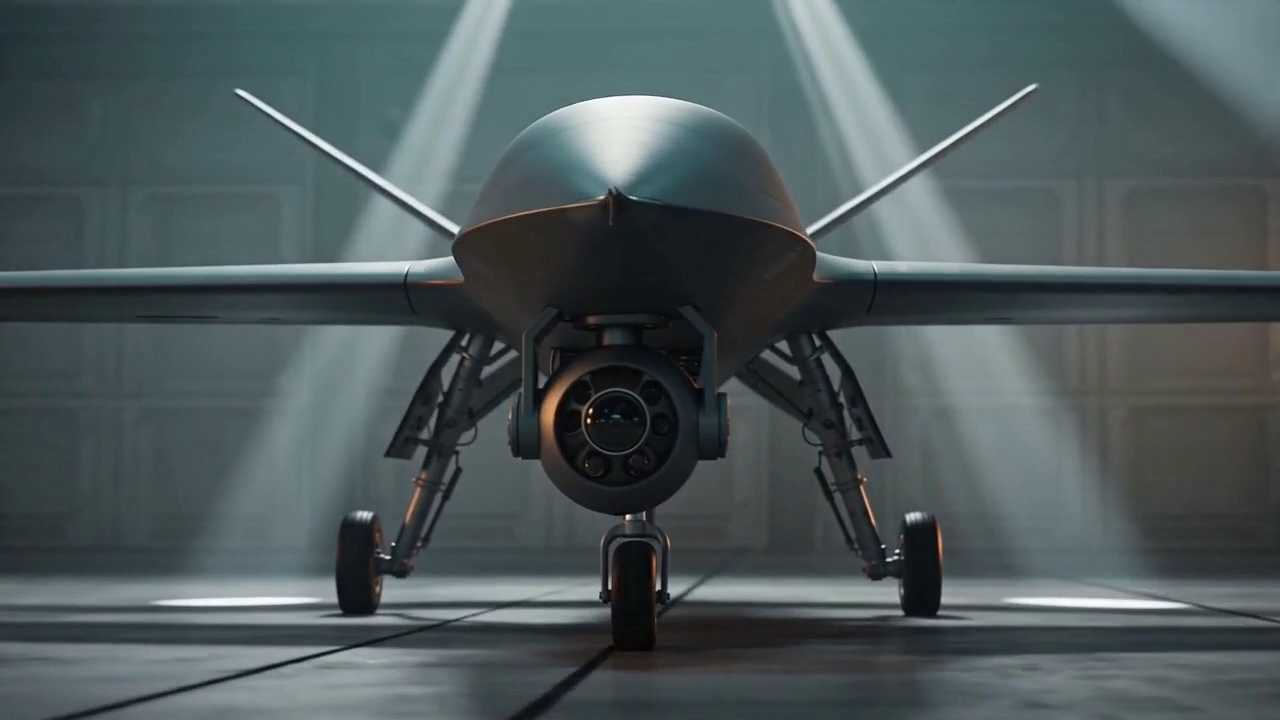
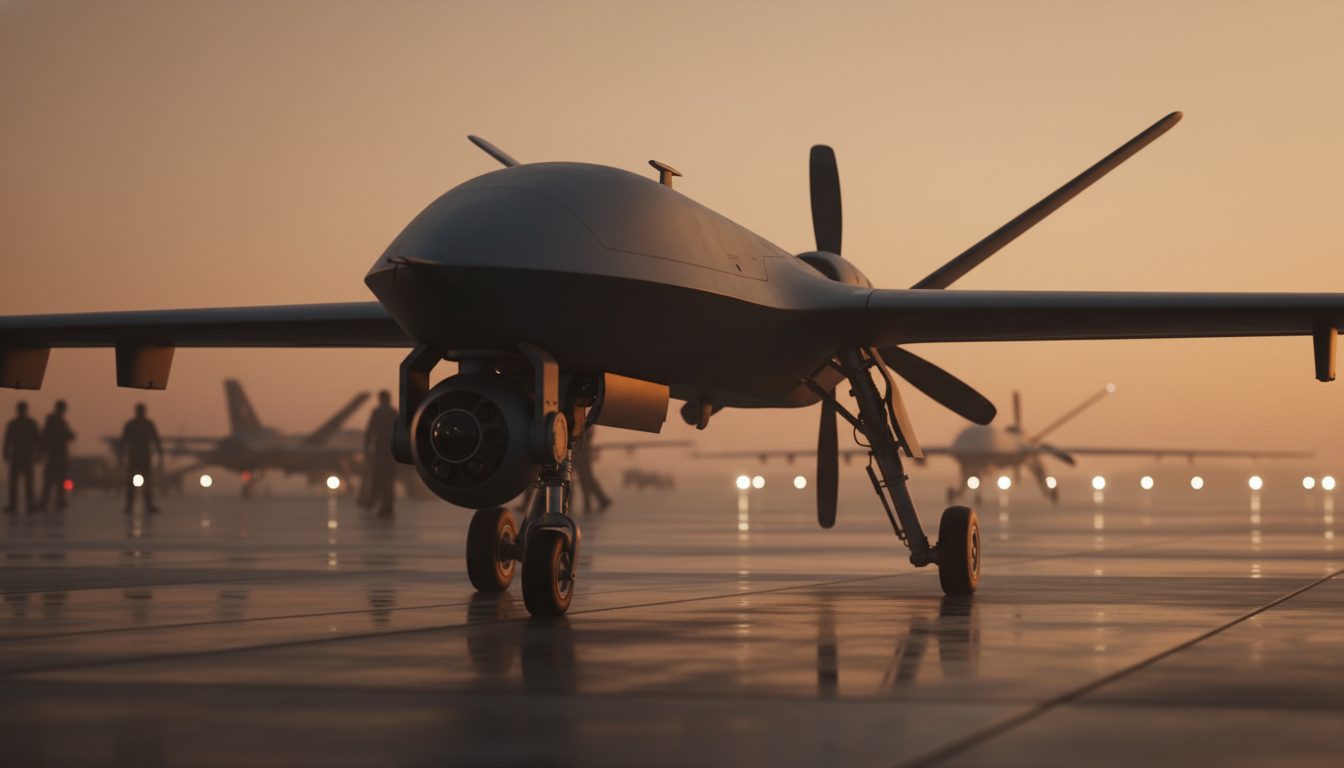
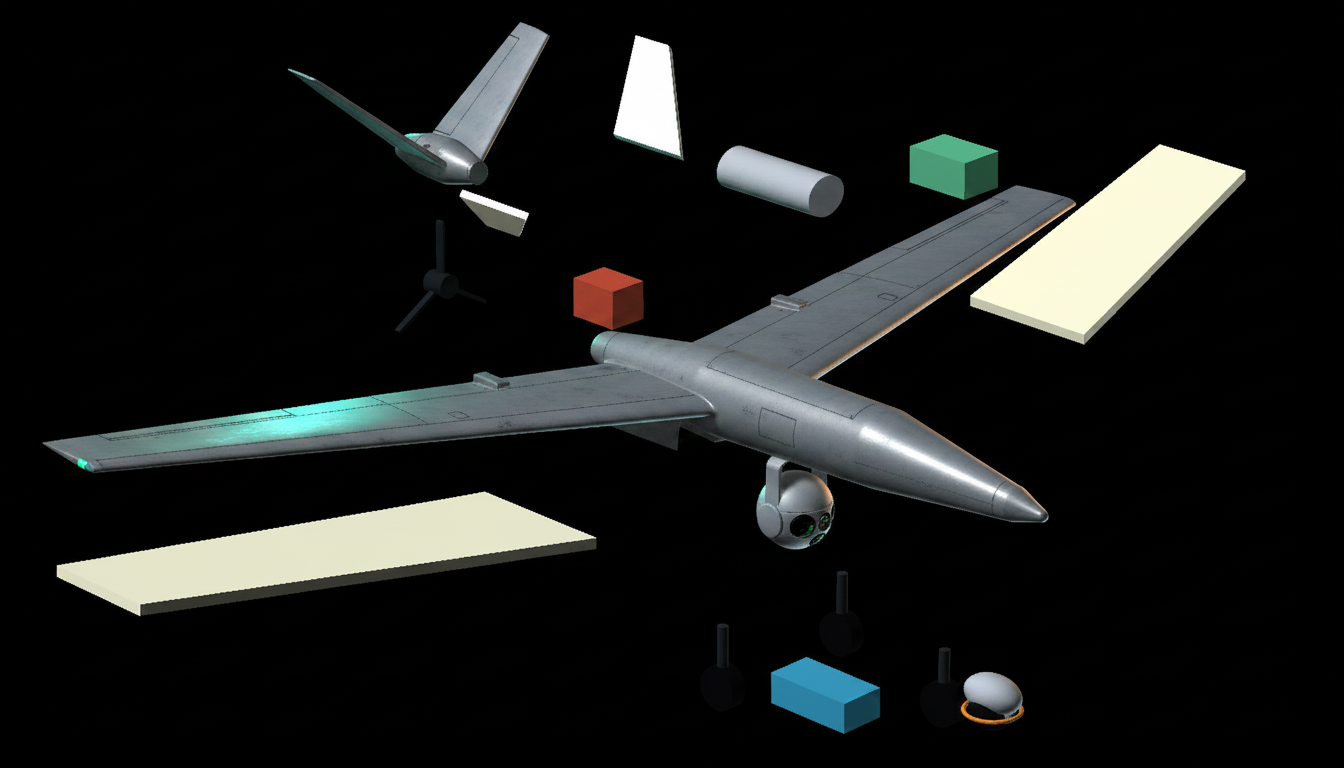
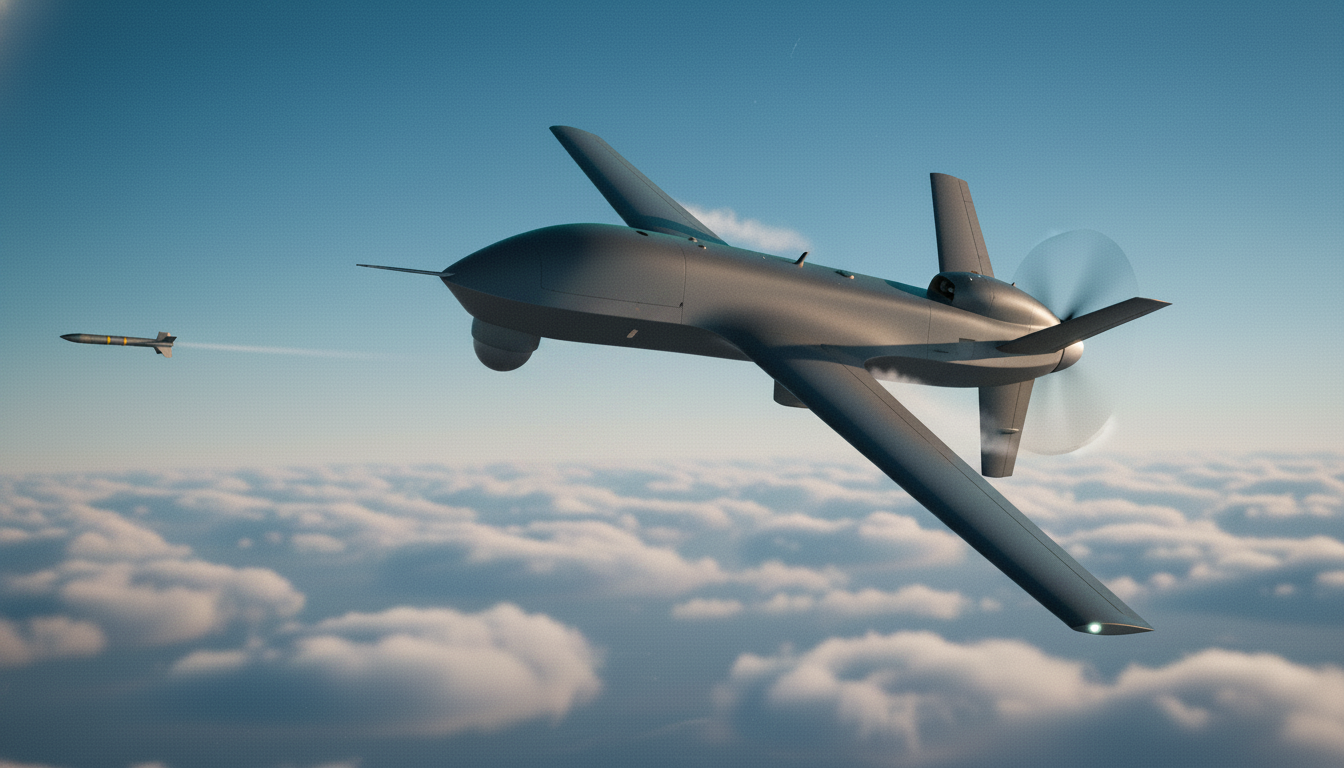
A reusable, fully-autonomous multi-mission combat drone. It sees the fight with a full EO/IR + designator, SAR & SIGINT sensor suite, navigates like a pilot — no GPS, no datalink — survives the laser + HPM + kinetic counter-UAS triad, and slots into the Air Force network only when it chooses. Built by the thousand on autonomous automaker lines. And it comes home — to refuel, rearm, re-fly. Only the munition is spent.
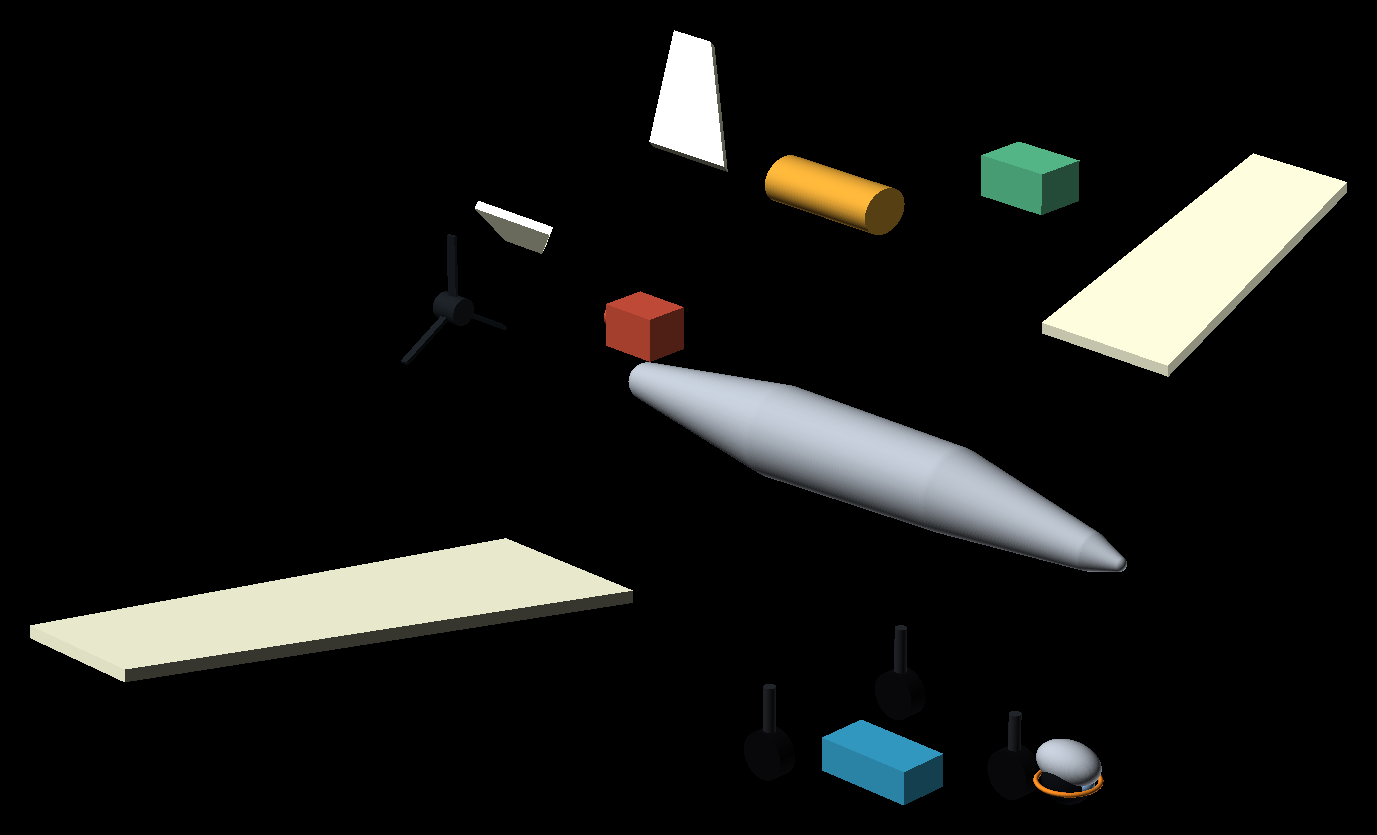
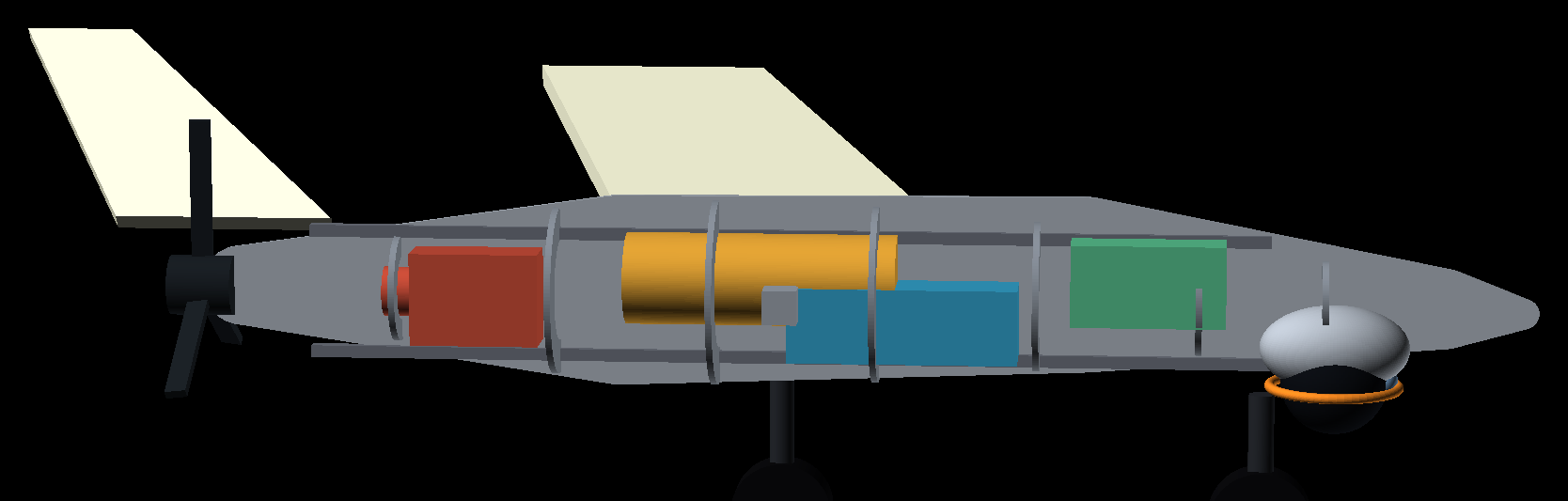
A parametric OpenSCAD model — gear-less, pusher, V-tail, faired & guarded EO/IR turret, belly skids — rendered to orthographic + isometric views with a dimensioned plan & profile. Concept GA; dimensions are targets [TBR]. ↓ Download the parametric CAD source (.scad)


WILDFIRE isn't inspired by the interview — it's a literal engineering readout of it. Twenty design drivers, each anchored to a verbatim quote with a timestamp.
RF links and fiber "are probably going to go away." WILDFIRE flies the whole mission with the radios off — autonomy does everything.
"Not off GPS or any radio… you look out the window and drive to the place you need to go." Vision-only nav + terminal target ID.
"Made in a Ford or GM or John Deere or Caterpillar factory… a thousand a day, not a thousand a decade." Steel, rivets, single-stage presses.
"Almost impossible to build something that can stop all three of those at the same time." WILDFIRE is built to be that impossible problem.
"A $300 chip is not the thing driving that price." Best-in-class edge AI, treated as a rounding error against the airframe.
The airframe, seeker, and compute are recovered every sortie. Reusability is the program's #1 KPP — and its economic engine.
A one-way airframe is the "total folly" Palmer warns against. WILDFIRE flies the entire loop 50+ times — the only thing it ever leaves behind is the munition. Here's the full breakdown.
Palmer's insight: any single counter-drone effector is beatable cheaply — but forcing a drone to beat all three at once is "really, really hard." WILDFIRE imposes exactly that problem on the enemy's C-UAS designer.
Low-cost ablative / reflective skin + thermal mass + optional body spin spreads and sheds directed-energy dwell.
Faraday-enclosed avionics, an optical internal data bus, and transient protection on every aperture.
A lateral solid-divert "dodge" motor throws WILDFIRE out of the probable-kill radius in the terminal instant.
WILDFIRE's autonomy core is the same vision-navigation stack flown in the AI Grand Prix (presented by Anduril): forward camera in, control out — no GPS, no LiDAR, no human in the loop.
The full ISR · targeting · EW · threat-warning suite, all fitted simultaneously — best-in-class, US-origin or close-allied, MOSA-modular. This is the no-compromise build. The cost-disciplined fielded baseline tiers down to a mission-kit subset (the 4-sensor designator turret alone is a ~$225k quote); full SWaP-C, alternates, and ITAR notes live in the engineering dossier.
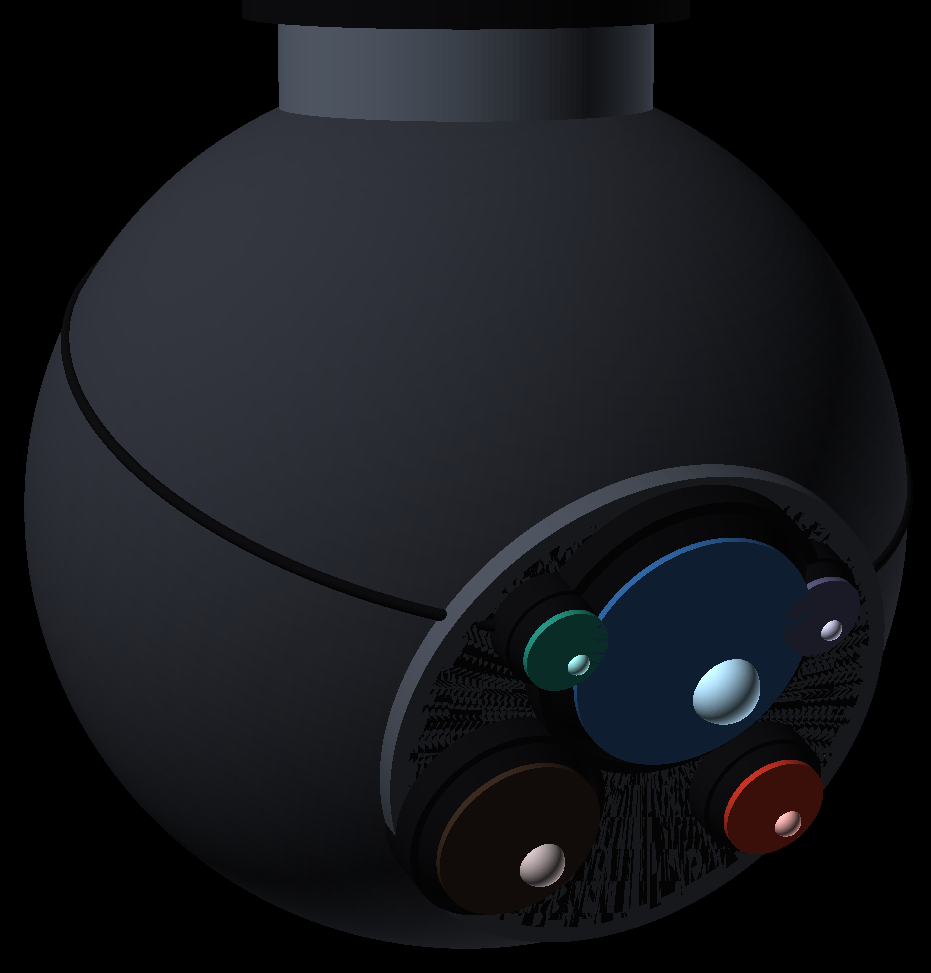
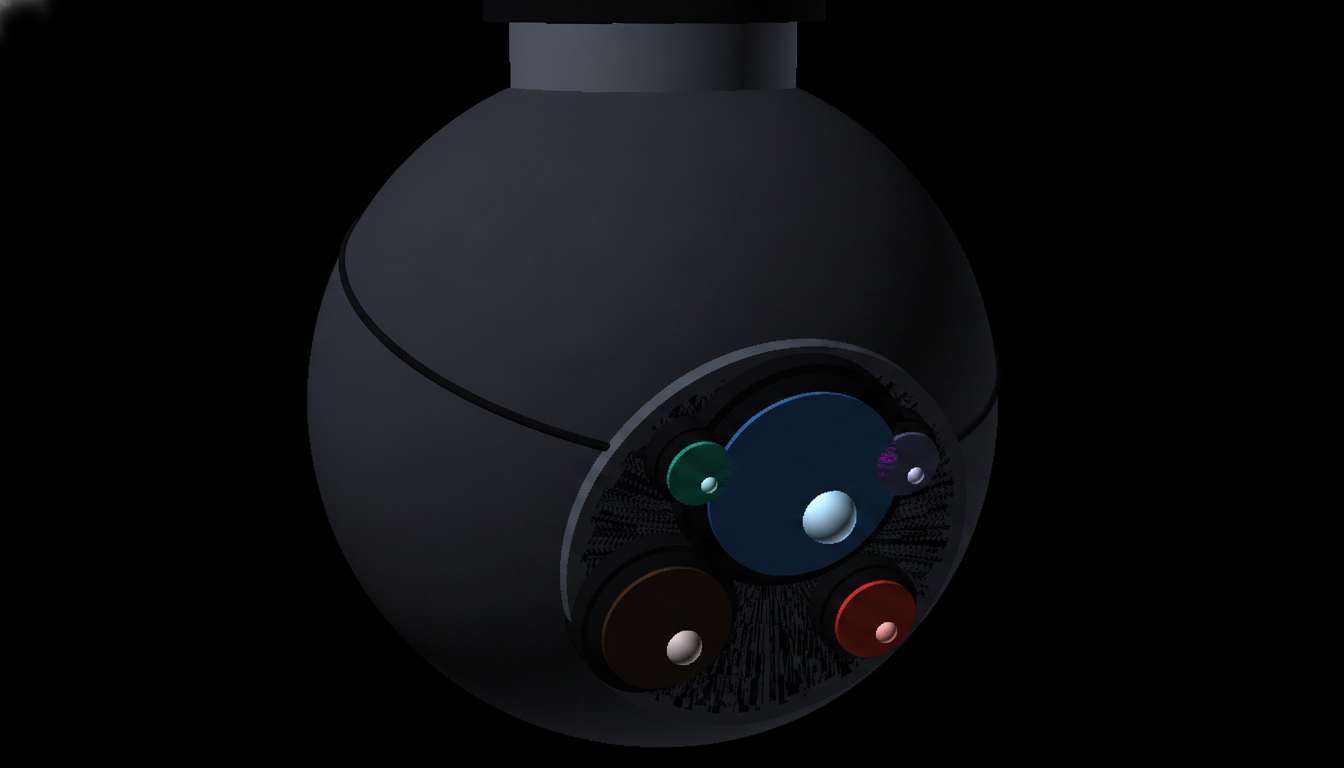
Trillium HD59-MLVS — MWIR + LWIR + EO + SWIR with a STANAG laser designator + rangefinder. Recessed, faired & ring-guarded so the PTZ turret survives belly / Skyhook recovery — the seeker comes home and is reused.
Vantor Raptor vision/terrain-referenced fix + ANELLO X3 photonic-gyro IMU + M-code/CRPA + low-SWaP star tracker. Navigates and targets with no GPS, no radio.
IMSAR NSP-3 — all-weather, day/night synthetic-aperture imaging plus ground moving-target indication through cloud, dust, and obscurant.
ASI SNITCH — passive HF–18 GHz signals intercept with single-platform 3D direction-finding and emitter geolocation — no GPS, no datalink.
Laser-warning receiver + IR missile/hostile-fire approach warning — detects the laser or interceptor and cues the terminal divert (DDR-11) in the last instant.
Multiple wide-FOV global-shutter cameras feeding the Thor-class brain — the "pilot's eyes" for navigation, autonomous Skyhook recovery, and terminal target ID.
Palmer's rule is "buildable in a car factory" — and a modern car factory is already a lights-out robotic body shop. The perfect-world build drops the DFM-simple airframe — stamped steel, rivets, <120 parts — straight onto the existing automated lines of domestic automakers (Ford · GM · Stellantis) by retooling, not building greenfield. Domestic first; the allied auto base (Japanese / Korean makers) is the fallback.
Modern auto body shops already run thousands of welding & stamping robots lights-out, 24/7. WILDFIRE's <120-part, generous-tolerance design retools straight onto them — no bespoke plant, minimal new labor.
Every airframe is born from a model-based digital thread; in-line machine-vision / AI inspection auto-accepts or rejects each part — no manual QC bottleneck, full unit-level traceability.
Surge across domestic automakers first; the allied auto base — the "consolation prize" Palmer names (Japanese automotive workers, DDR-20) — is the fallback. Reuse multiplies effective fleet capacity on top.
The airframe shell isn't stamped — it's a glass/basalt composite monocoque, wet-compression-molded on matched steel tools in ~120–180 s, with steel frames over-molded at the hardpoints — "soft shell, hard bones." It's the same robot-place → press cell modern automakers already run lights-out, so it drops onto the existing line and scales to ≥1,000/day on ~3–9 presses (~12–24 steel tool sets).
Concept point design, Rev B.1 — closed at 175 kg MTOW. Figures are engineering targets/estimates; the full traceability, budgets, and risk register live in the dossier.
The blue-side answer Palmer calls "the top of my pinnacle": a fast, recoverable kinetic interceptor that goes out, kills, and comes home to be refueled, rearmed, and reused. Same autonomy core, same manufacturing doctrine, same open network.
This package was run through an adversarial engineering review. Here's exactly what closes and what's still an open, managed risk — because that's what a real program looks like.
Reusable. Vision-guided. Survivable. Mass-producible. Every requirement traces to a line you actually said. The full engineering dossier — requirements matrix, subsystem designs, budgets, and risk register — is one click away.