ALT 4200 m
SPD 120 kt
HDG 047°
FUEL 88%
VISION · TRACK
EO/IR + LRF/LDVISION-NAV ARRAYFARADAY COMPUTE BAYDIVERT MOTORSHEAVY-FUEL PUSHER
WILDFIRE · AGP-1
DWG
AGP1-GA-001
REV
B.1
TYPE
REUSABLE MULTIROLE UCAV
NAV
VISION · GPS-DENIED · RF-OPTIONAL
SHEET
1 / 1
UNITS
mm
Reusable · Autonomous · Multi-Mission Combat UAS

WILDFIRE

The reusable drone Palmer Luckey described — engineered.

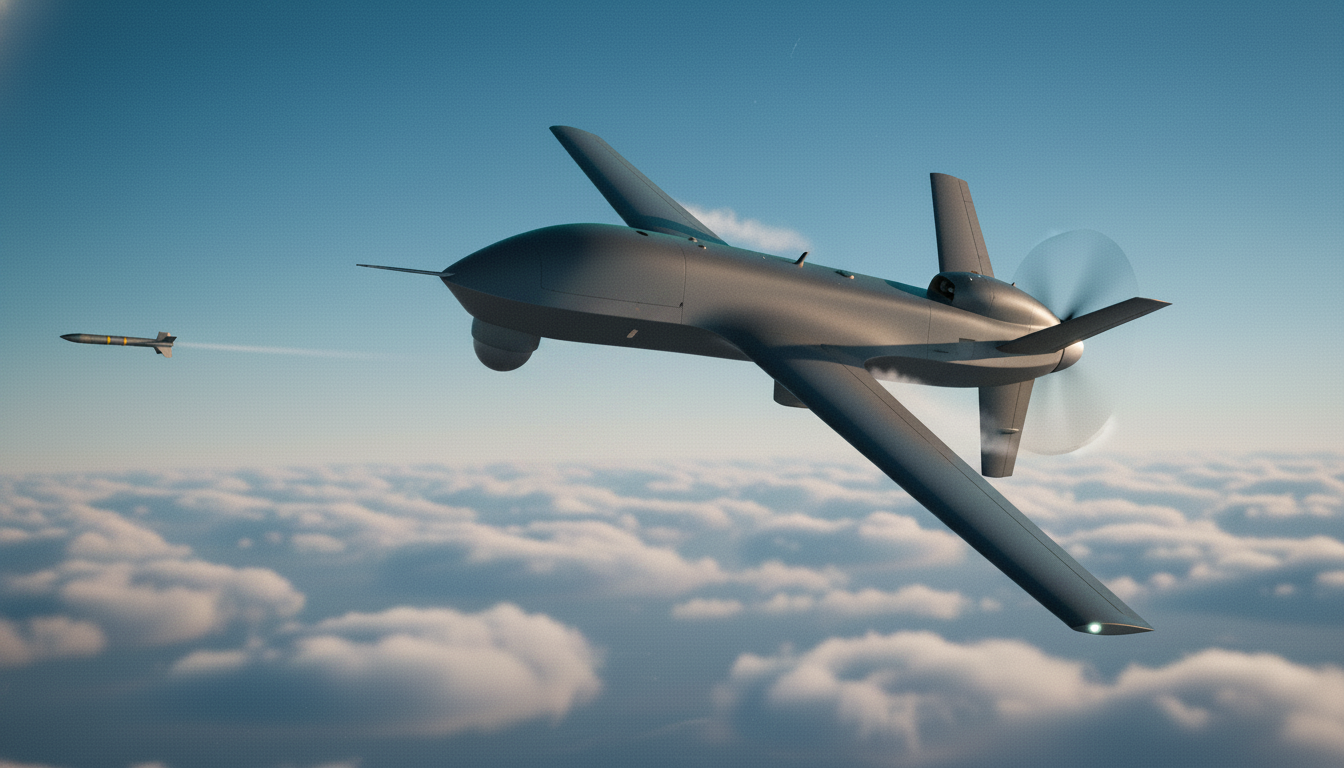
A reusable, fully-autonomous multi-mission combat drone. It sees the fight with a full EO/IR + designator, SAR & SIGINT sensor suite, navigates like a pilot — no GPS, no datalink — survives the laser + HPM + kinetic counter-UAS triad, and slots into the Air Force network only when it chooses. Built by the thousand on autonomous automaker lines. And it comes home — to refuel, rearm, re-fly. Only the munition is spent.

SCROLL
0kg
MTOW
0+ sorties
Reuse life
$0k
Cost / sortie
~$0k
Flyaway
0km
Strike radius
0/day
Surge build
One reusable airframe, sensor-reconfigurable → ISRStrikeEW / SEADReconDecoyComms relay
"Kinetics need to be reusable. We need to get away from this idea that we throw away every interceptor every single time. It'll never work. It's a total folly… they need to come back so they can be refueled, rearmed, and reused. I'm not throwing away my seeker. I'm not throwing away my airframe."
— Palmer Luckey · Inside West Point: Ideas That Impact · 20:22
General arrangement CAD

WILDFIRE, drawn.

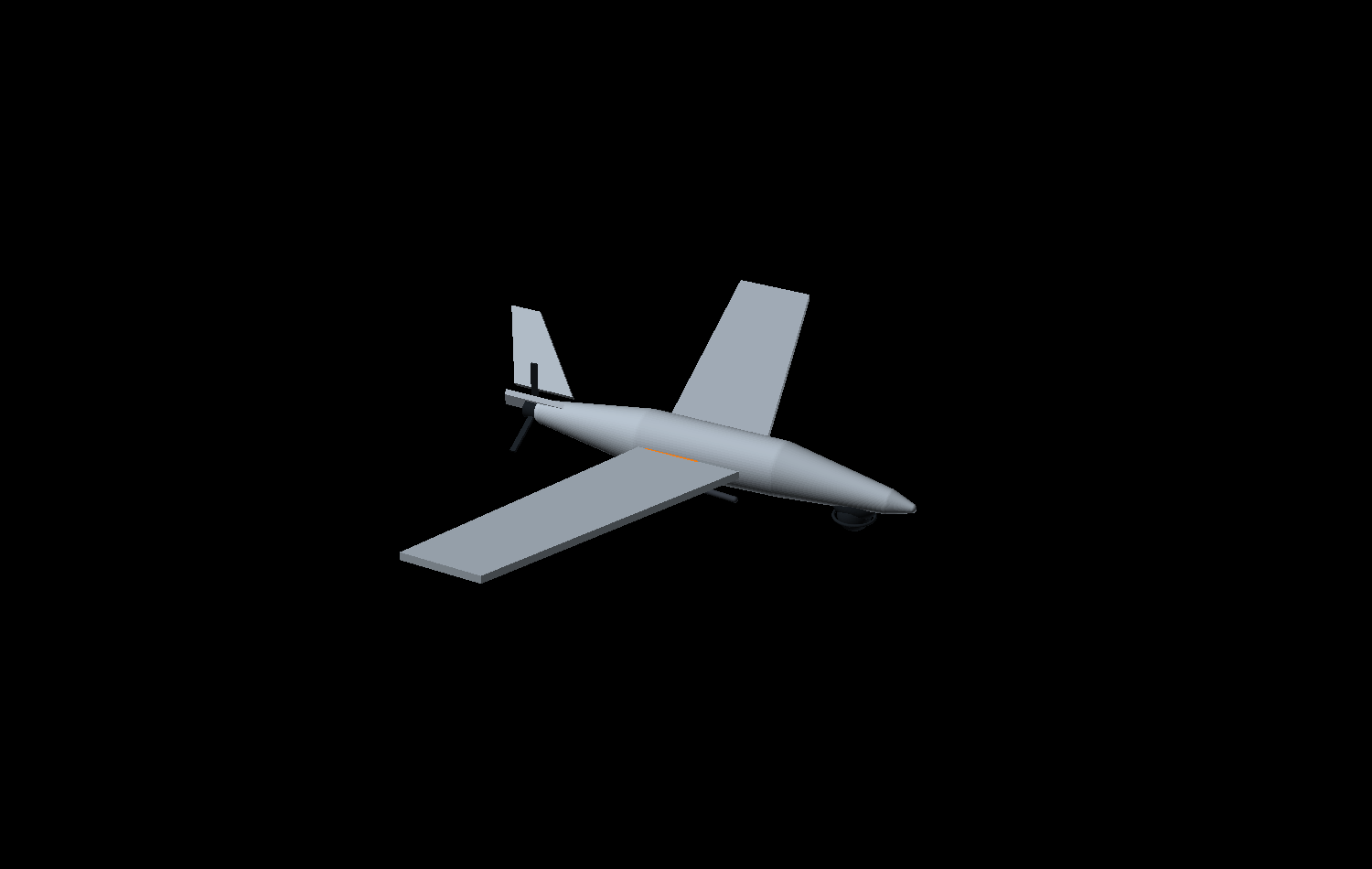
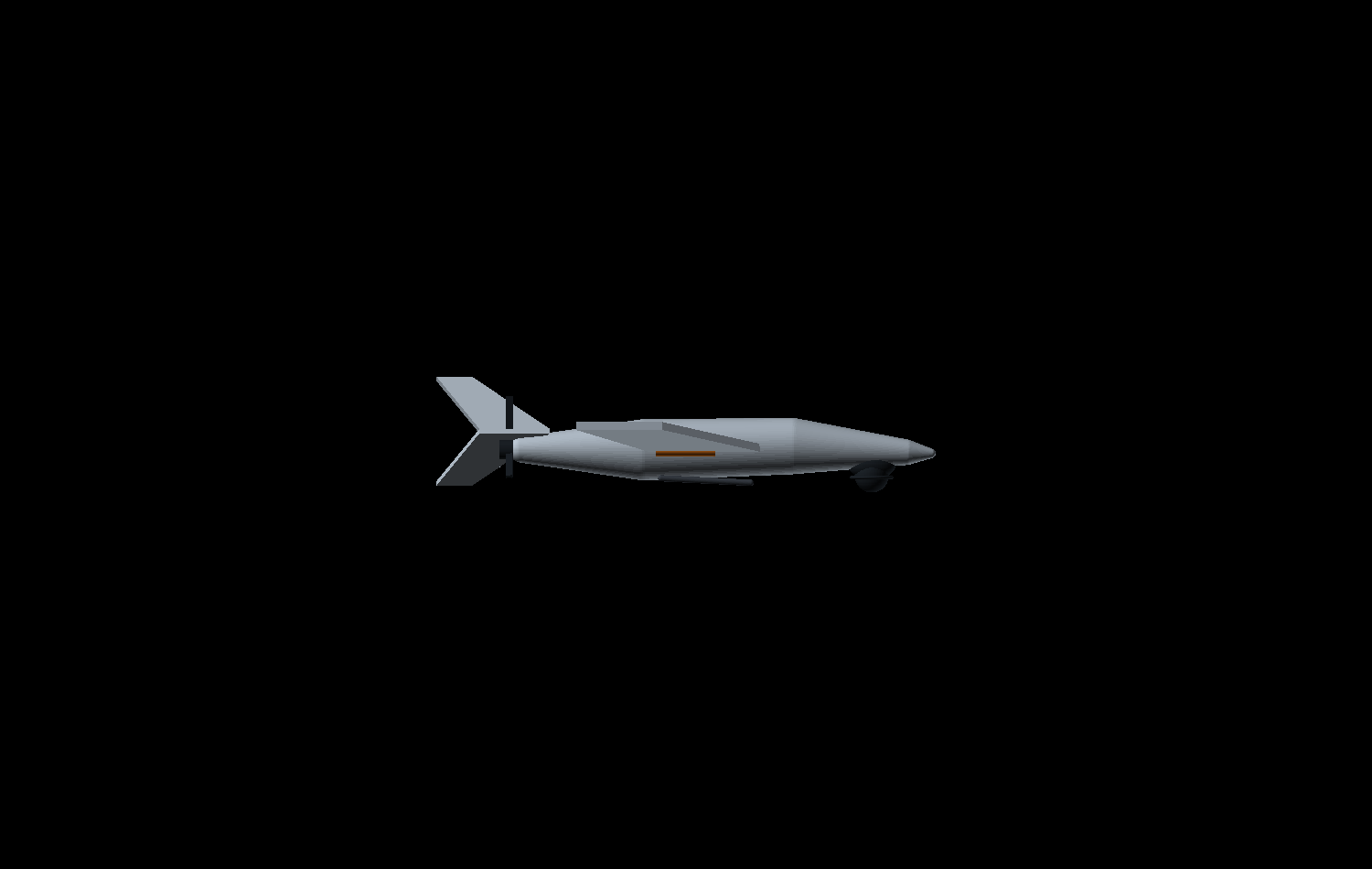
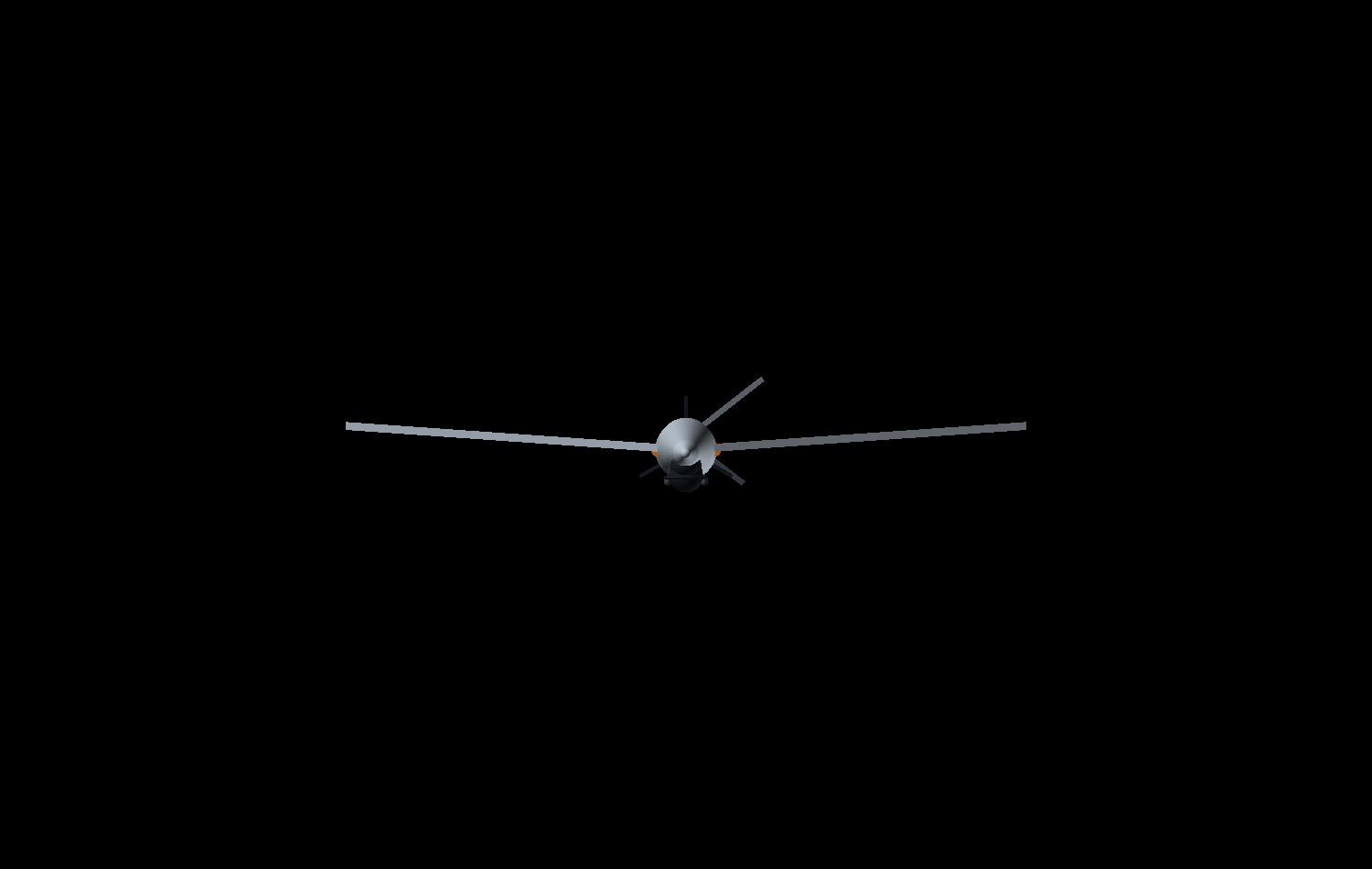
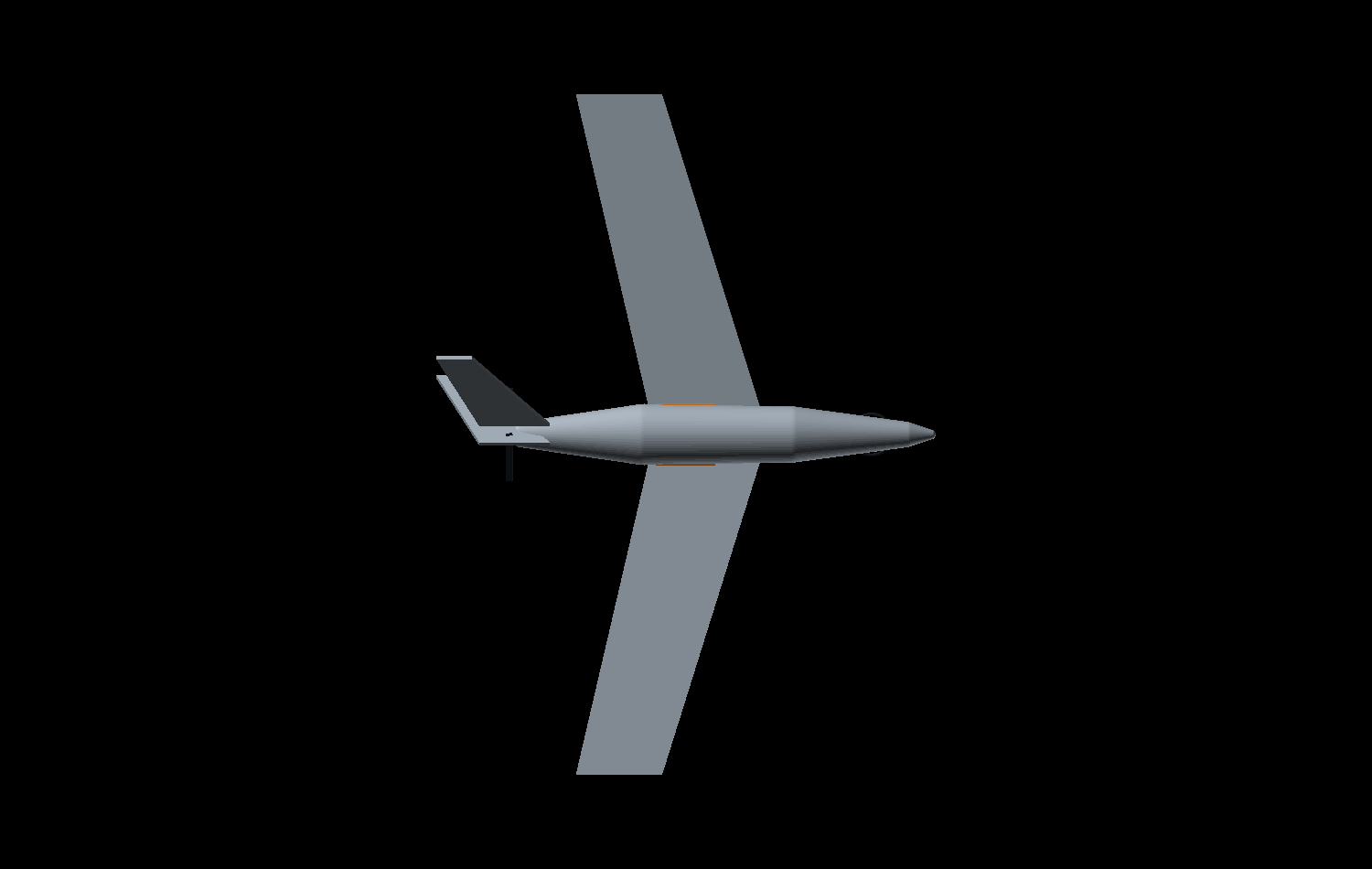
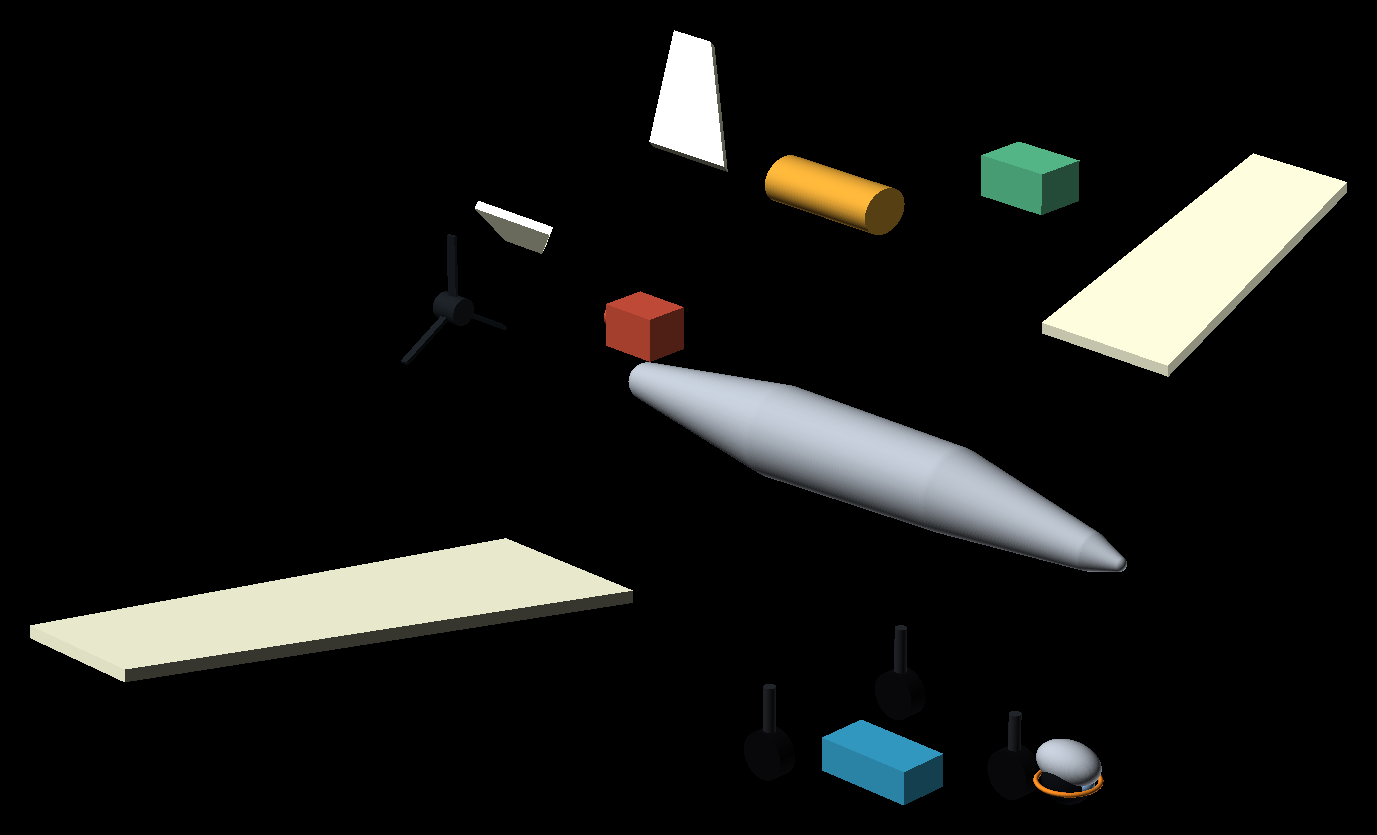
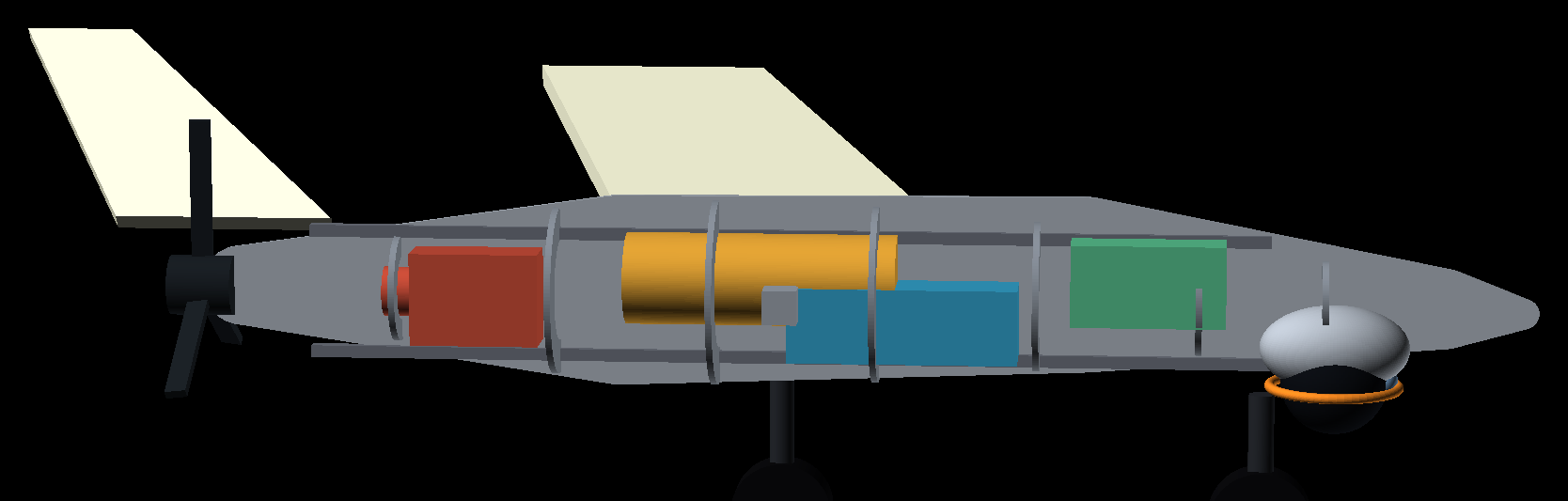
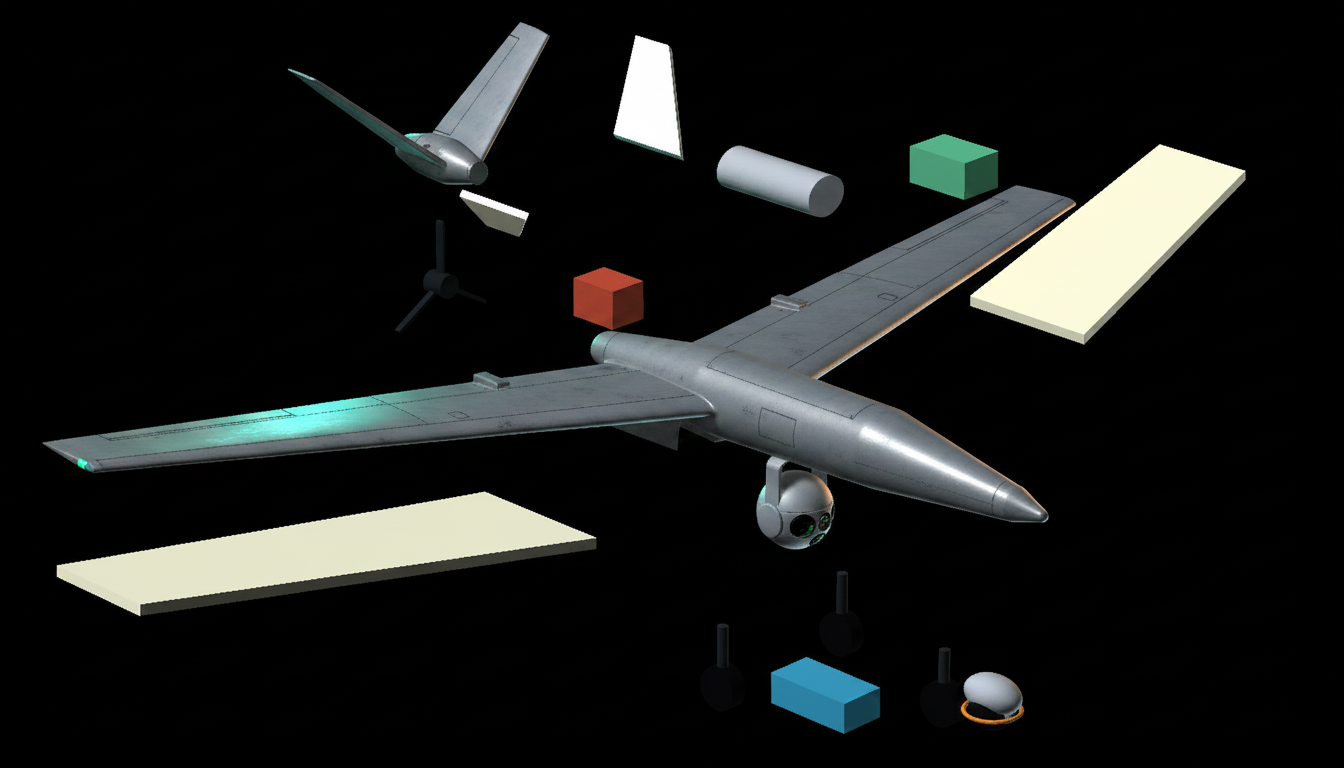
A parametric OpenSCAD model — gear-less, pusher, V-tail, faired & guarded EO/IR turret, belly skids — rendered to orthographic + isometric views with a dimensioned plan & profile. Concept GA; dimensions are targets [TBR]. ↓ Download the parametric CAD source (.scad)

WILDFIRE · AGP-1 — GENERAL ARRANGEMENT · PLAN + PROFILE · CONCEPT [TBR] PLAN SPAN 6.0 m c̄ 0.98 m PROFILE HEIGHT 0.95 m L.O.A. 3.6 m · prop ø 0.98 m 1 2 3 4
① faired & guarded EO/IR turret · ② pusher prop · ③ V-tail · ④ belly skid — gear-less: no landing gear; rail-launched, Skyhook-recovered.
WILDFIRE isometric CAD view
ISOisometric
WILDFIRE plan CAD view
PLANtop · orthographic
WILDFIRE profile CAD view
PROFILEside · orthographic
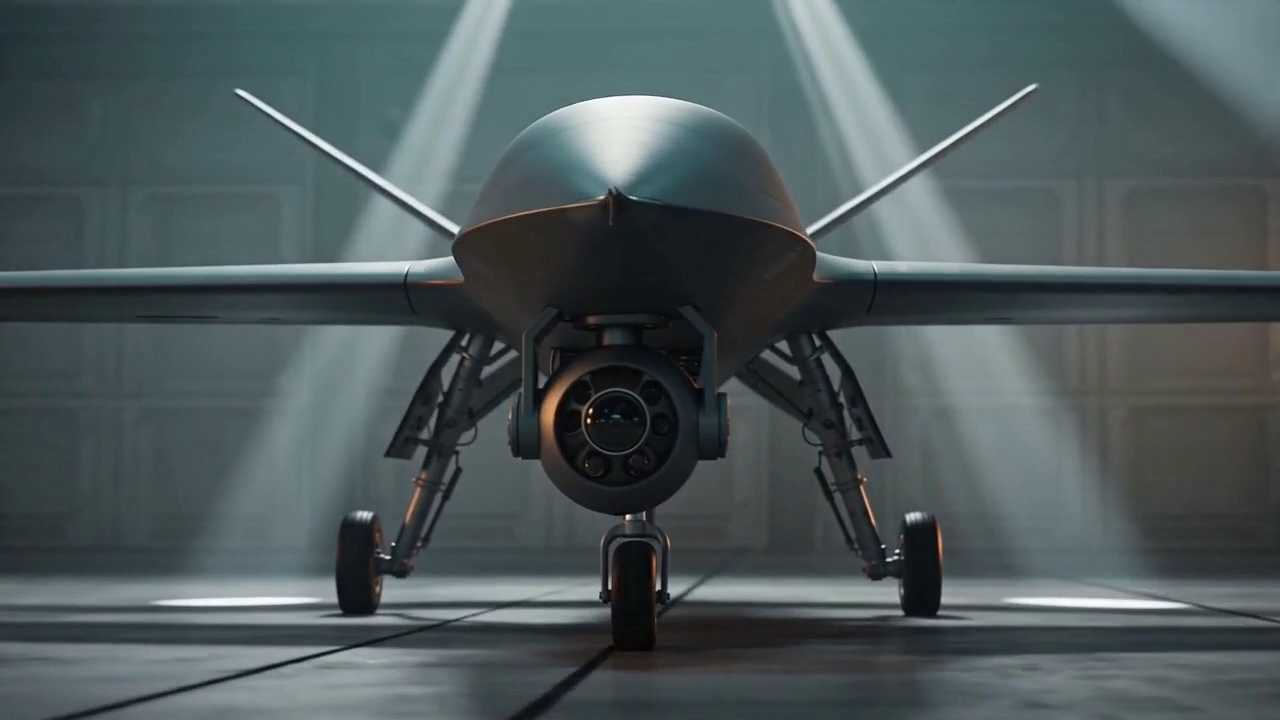
WILDFIRE front CAD view
ENDfront · orthographic
6.0 m
Wingspan
3.6 m
Length (L.O.A.)
~0.95 m
Height
0.98 m
Pusher prop dia.
~4.6 m²
Wing area
~7.8
Aspect ratio
175 kg
MTOW
~104.5 kg
Empty (equipped)
~45 kg
Fuel
25 kg
Payload
~38 kg/m²
Wing loading
≥50
Reuse (sorties)
01 / Built to his spec

Every design decision traces to something he said on that stage.

WILDFIRE isn't inspired by the interview — it's a literal engineering readout of it. Twenty design drivers, each anchored to a verbatim quote with a timestamp.

filmWILDFIRE — concept reveal
🛰️

Onboard autonomy, not radio

RF links and fiber "are probably going to go away." WILDFIRE flies the whole mission with the radios off — autonomy does everything.

DDR-01 · 14:36
👁️

Navigates like a pilot

"Not off GPS or any radio… you look out the window and drive to the place you need to go." Vision-only nav + terminal target ID.

DDR-02 · 16:01
🏭

Built in a car factory

"Made in a Ford or GM or John Deere or Caterpillar factory… a thousand a day, not a thousand a decade." Steel, rivets, single-stage presses.

DDR-06 / 08 · 21:55
🛡️

Survives all three threats

"Almost impossible to build something that can stop all three of those at the same time." WILDFIRE is built to be that impossible problem.

DDR-12 · 18:46
🧠

Compute is a rounding error

"A $300 chip is not the thing driving that price." Best-in-class edge AI, treated as a rounding error against the airframe.

DDR-03 · 15:48
♻️

It comes home

The airframe, seeker, and compute are recovered every sortie. Reusability is the program's #1 KPP — and its economic engine.

DDR-15 · 20:22
02 / The reusable airframe — how it works

Launch. Strike. Come home. Re-fly. ×50.

A one-way airframe is the "total folly" Palmer warns against. WILDFIRE flies the entire loop 50+ times — the only thing it ever leaves behind is the munition. Here's the full breakdown.

filmPit-crew turnaround — refuel · rearm · re-fly
01LAUNCH 02INGRESS 03STRIKE · release 04EGRESS 05RECOVER 06 · REFUEL · REARM · RE-FLY ×50
01Rail / RATO launch
05Skyhook recovery — it comes home

Comes home — recovered & reused, every sortie

AirframeEO/IR + designator seekerThor-class computeHeavy-fuel engineNav / vision sensorsSDR / datalink
$128k of the ~$130k airframe flies home — to do it again.

Expended — only this

The munition
The sole consumable. Everything else returns.
≥50× REFUEL · REARM · REUSE 01LAUNCH 02INGRESS 03STRIKE 04RTB 05RECOVER
Runway-independent. Rail / rocket-assisted launch, Skyhook-style cable recovery. No airfield required.
≤ 30-minute turnaround. A small pit crew refuels, rearms, runs a health check, and re-launches.
Cost-per-sortie collapses. Amortize a ~$130k airframe over 50+ sorties → ~$3.1k per sortie + fuel + munition.
Only the munition is expended. The seeker, the airframe, the $-heavy compute — all come back. That's the whole point.

Turnaround ≤ 30 MIN · small pit crew

RECOVERSkyhook catch
HUMS CHECKhealth & airframe
REFUELheavy fuel
REARMnew munition + divert
RE-LAUNCHback in the fight
One-way attritable drone
airframe spent every shot
~$130k / shot
WILDFIRE — reusable
only the munition spent
~$3.1k / sortie
$130k flyaway ÷ ≥50 sorties = ~$2.6k airframe share + fuel + munition ≈ ~$3.1k per sortie — roughly a 40× cost-per-effect advantage. This is the economic core of Palmer's "kinetics need to be reusable."
03 / Survive the triad

Lasers. Microwaves. Kinetics. At the same time.

Palmer's insight: any single counter-drone effector is beatable cheaply — but forcing a drone to beat all three at once is "really, really hard." WILDFIRE imposes exactly that problem on the enemy's C-UAS designer.

LASER

Beam → ablated away

Low-cost ablative / reflective skin + thermal mass + optional body spin spreads and sheds directed-energy dwell.

"A trip to Home Depot and $10 will make a drone 100× more survivable against a laser." · 18:09
HPM / EMP

Pulse → shrugged off

Faraday-enclosed avionics, an optical internal data bus, and transient protection on every aperture.

Hardening drops HPM effective range from tens of km to meters — "a thousand times more survivable." · 18:24
KINETIC

Interceptor → dodged

A lateral solid-divert "dodge" motor throws WILDFIRE out of the probable-kill radius in the terminal instant.

"Solid rocket boosters that shove you out of the way at the last second." · 18:38
…and it does all of this while keeping range + payload — and still flies home to do it again.
filmTerminal divert — shoved out of the probable-kill radius
04 / The brain

A pilot's eyes, in silicon.

WILDFIRE's autonomy core is the same vision-navigation stack flown in the AI Grand Prix (presented by Anduril): forward camera in, control out — no GPS, no LiDAR, no human in the loop.

  • Perception → pose → guidance → control, entirely onboard. Jam the radios and the navigation; it doesn't care.
  • Best-in-class edge AI (Thor-class, ~1,000–2,000 TOPS) in a Faraday-shielded bay — a rounding error on cost.
  • Autonomous precision recovery. The same vision brain that races the gates flies the Skyhook capture.
  • Bounded & auditable. Geofences, ROE gates, human-on-the-loop for lethal release, deterministic abort.
// onboard, GPS-denied, RF-silent
frame camera.read()
gates,targets vision.detect(frame)
pose pnp.solve(gates) // 6-DoF
plan mpc.optimize(pose,target)
cmd policy(plan) // RL · ONNX
if roe.ok(target): release()
else: rtb() // come home, re-fly
HERITAGE · vision_pipeline.py · drone_mpc_foundation.py · rl_controller.py · flown in AIGP simulation
filmGPS-denied low-altitude ingress — radios silent, looking out the window
Sensor suite Perfect-world loadout

Every sensor, installed at once.

The full ISR · targeting · EW · threat-warning suite, all fitted simultaneously — best-in-class, US-origin or close-allied, MOSA-modular. This is the no-compromise build. The cost-disciplined fielded baseline tiers down to a mission-kit subset (the 4-sensor designator turret alone is a ~$225k quote); full SWaP-C, alternates, and ITAR notes live in the engineering dossier.

🎯

EO/IR + Laser Designator

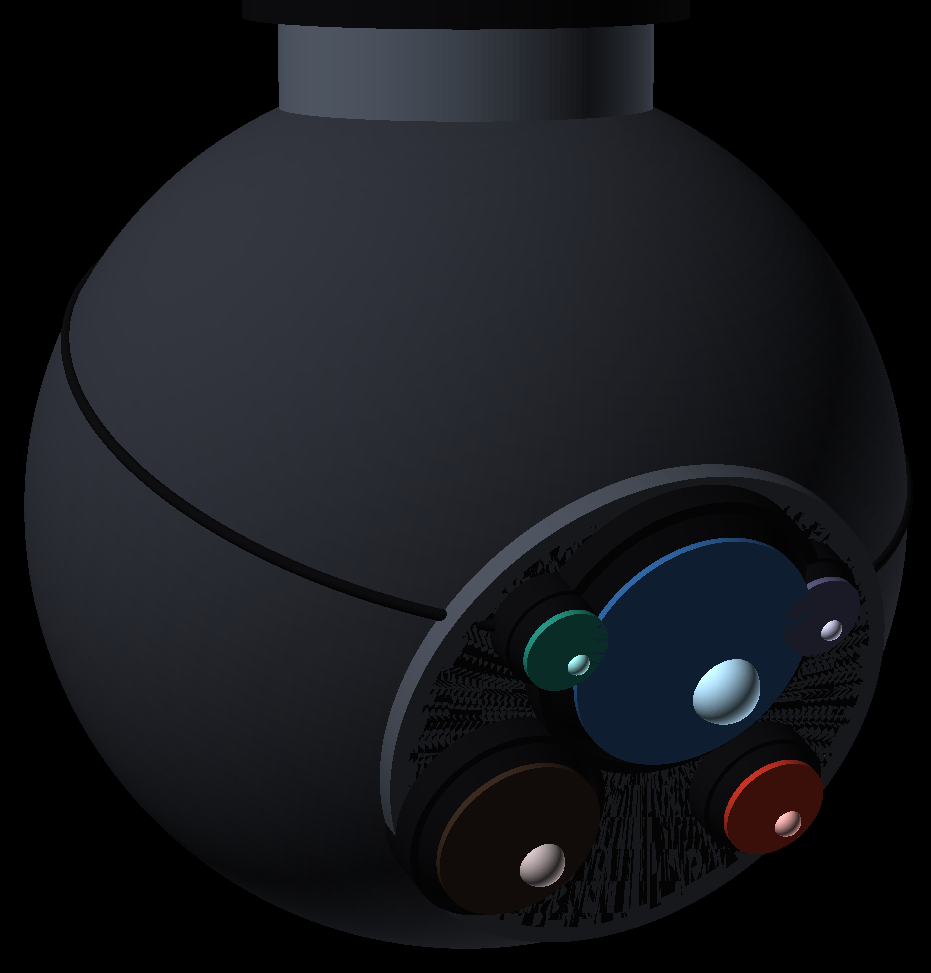
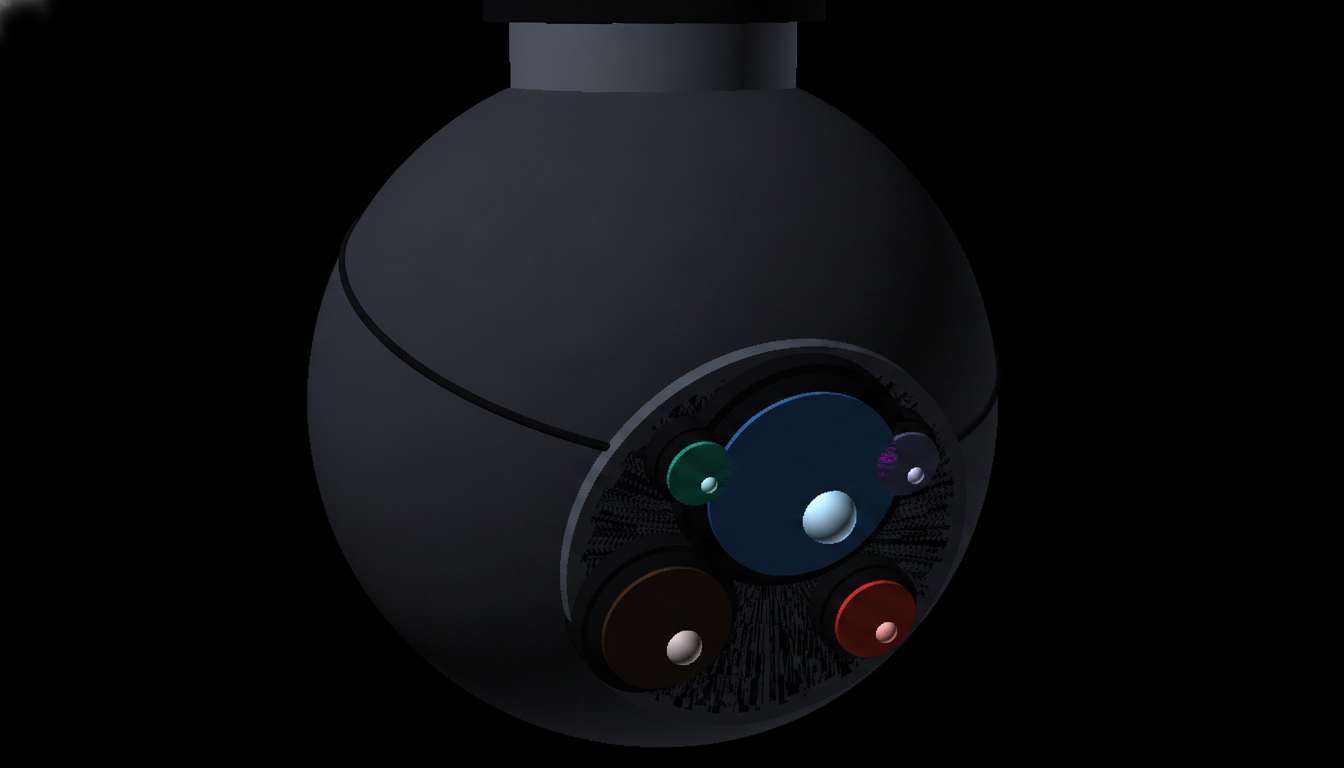
Trillium HD59-MLVS — MWIR + LWIR + EO + SWIR with a STANAG laser designator + rangefinder. Recessed, faired & ring-guarded so the PTZ turret survives belly / Skyhook recovery — the seeker comes home and is reused.

≈1.95 kg · protected · reused every sortie
🧭

GPS-denied PNT

Vantor Raptor vision/terrain-referenced fix + ANELLO X3 photonic-gyro IMU + M-code/CRPA + low-SWaP star tracker. Navigates and targets with no GPS, no radio.

software + ≈0.2 kg · the DDR-02/04 core
📡

SAR / GMTI radar

IMSAR NSP-3 — all-weather, day/night synthetic-aperture imaging plus ground moving-target indication through cloud, dust, and obscurant.

≈2.7 kg · 74 W · mission module
📶

SIGINT / EW · geolocation

ASI SNITCH — passive HF–18 GHz signals intercept with single-platform 3D direction-finding and emitter geolocation — no GPS, no datalink.

≈1.6 kg · 40 W · mission module
⚠️

Threat warning

Laser-warning receiver + IR missile/hostile-fire approach warning — detects the laser or interceptor and cues the terminal divert (DDR-11) in the last instant.

≈0.5 kg · feeds the dodge
👁️

Vision-nav array

Multiple wide-FOV global-shutter cameras feeding the Thor-class brain — the "pilot's eyes" for navigation, autonomous Skyhook recovery, and terminal target ID.

the AIGP heritage core
filmEO/IR targeting — track & designate, GPS-denied
filmGimballed multi-sensor turret
05 / Autonomous manufacturing Perfect-world

A lights-out line that builds them by the thousand.

Palmer's rule is "buildable in a car factory" — and a modern car factory is already a lights-out robotic body shop. The perfect-world build drops the DFM-simple airframe — stamped steel, rivets, <120 parts — straight onto the existing automated lines of domestic automakers (Ford · GM · Stellantis) by retooling, not building greenfield. Domestic first; the allied auto base (Japanese / Korean makers) is the fallback.

🤖

Existing automaker robot lines

Modern auto body shops already run thousands of welding & stamping robots lights-out, 24/7. WILDFIRE's <120-part, generous-tolerance design retools straight onto them — no bespoke plant, minimal new labor.

🧬

Digital thread + autonomous QA

Every airframe is born from a model-based digital thread; in-line machine-vision / AI inspection auto-accepts or rejects each part — no manual QC bottleneck, full unit-level traceability.

🏭

Domestic-first · allied fallback · ≥1,000/day

Surge across domestic automakers first; the allied auto base — the "consolation prize" Palmer names (Japanese automotive workers, DDR-20) — is the fallback. Reuse multiplies effective fleet capacity on top.

The shell — a molded monocoque

The airframe shell isn't stamped — it's a glass/basalt composite monocoque, wet-compression-molded on matched steel tools in ~120–180 s, with steel frames over-molded at the hardpoints — "soft shell, hard bones." It's the same robot-place → press cell modern automakers already run lights-out, so it drops onto the existing line and scales to ≥1,000/day on ~3–9 presses (~12–24 steel tool sets).

PREFORM → LOAD → WET-COMPRESSION MOLD → CURE → DEMOLD → TRIM / NDI → BOND HALVES + STEEL FRAMES → FINISH
↳ Full 11-step molding process + tooling plan in the dossier
filmLights-out robotic line — the autonomous factory
01Stamping — steel panels
02Robotic welding cell
03Automated assembly
04Mass rollout
filmThe output — mass at the front
06 / Specification · AGP-1

WILDFIRE, by the numbers.

Concept point design, Rev B.1 — closed at 175 kg MTOW. Figures are engineering targets/estimates; the full traceability, budgets, and risk register live in the dossier.

ClassGroup 3 · reusable UCAV · USAF CCA-adjacent
ConfigurationFixed-wing, pusher, V-tail
MTOW175 kg (385 lb)
Empty (equipped)~104.5 kg
Payload (modular)up to 25 kg
Propulsion~35 hp heavy-fuel pusher
Strike radius1,500–2,500 km
Endurance12–20 h loiter
NavigationVision-only, GPS-denied · Raptor + ANELLO X3
SensorsEO/IR + designator (HD59-MLVS) · SAR/SIGINT
CommsRF-optional · Link 16 + MUOS (KOR-24A)
ComputeThor-class ~1–2k TOPS
Launch / recoveryRail·RATO / Skyhook
Landing gearNone · belly skids + ground cradle
Reuse life≥ 50 sorties
Turnaround≤ 30 min
SurvivabilityLaser + HPM + kinetic
Flyaway (volume)~$130k (≤$150k)
Cost / sortie~$3.1k + fuel + munition
07 / The companion

BACKFIRE — the reusable interceptor.

The blue-side answer Palmer calls "the top of my pinnacle": a fast, recoverable kinetic interceptor that goes out, kills, and comes home to be refueled, rearmed, and reused. Same autonomy core, same manufacturing doctrine, same open network.

RoleReusable C-UAS interceptor
PropulsionTwin turbojet / rocket-boost
Top speedM0.85 → supersonic dash
KillHit-to-kill (no warhead) or frag
Cost / shot≪ $20k — fuel (+ optional warhead)
ReuseAirframe + seeker recovered
08 / Design maturity

An honest concept, not a sales sheet.

This package was run through an adversarial engineering review. Here's exactly what closes and what's still an open, managed risk — because that's what a real program looks like.

✓ Closes

Mass budget closes at 175 kg MTOW with full 25 kg payload (+0.5 kg margin)
All 20 design drivers traced to verbatim interview quotes
Reusability designed in end-to-end — no one-way airframe anywhere
Flyaway ~$130k, under the ≤$150k target

! Managed / open

Skyhook recovery scaled ~5× beyond heritage — recovery method not yet down-selected
≥50-sortie engine/structural life vs engine-hour math — needs test
Combined-adverse range (~1,150 km worst case) — RTB reserve protected regardless
No KPP is flight-verified yet — this is a concept study
Mr. Luckey — you described this on stage.

Here it is, engineered.

Reusable. Vision-guided. Survivable. Mass-producible. Every requirement traces to a line you actually said. The full engineering dossier — requirements matrix, subsystem designs, budgets, and risk register — is one click away.